
Industry study
This study summarizes the latest developments and opportunities in alternative protein precision fermentation for corporates. It showcases that partnerships are key to success, and highlights a broad spectrum of applications in alternative meat, dairy, and egg proteins.

A strategic view of where precision fermentation stands today – the players, the partnerships, and the business opportunities ahead.
In this study
The various benefits precision fermentation offers to businesses across taste, texture, and nutrition.
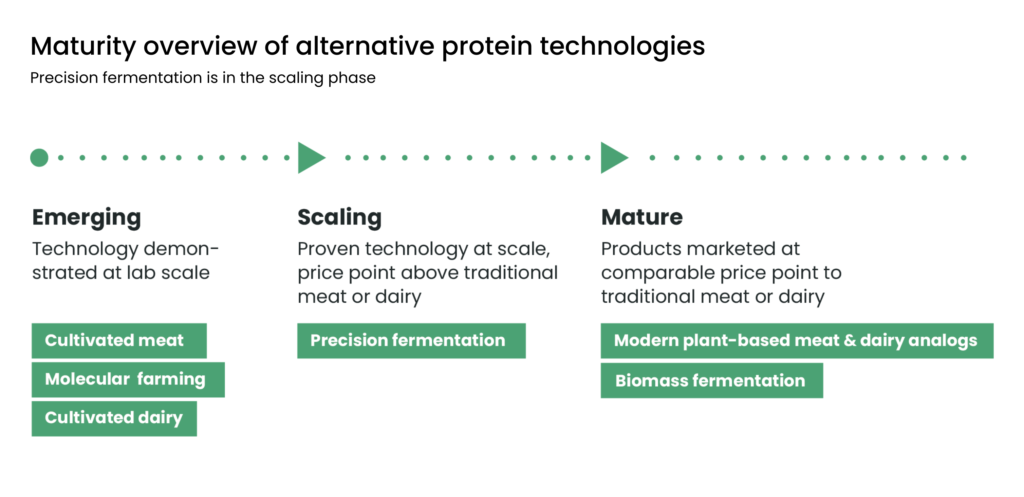
Why precision fermentation is one of the most mature alternative protein technologies, behind plant-based analogs and biomass fermentation.
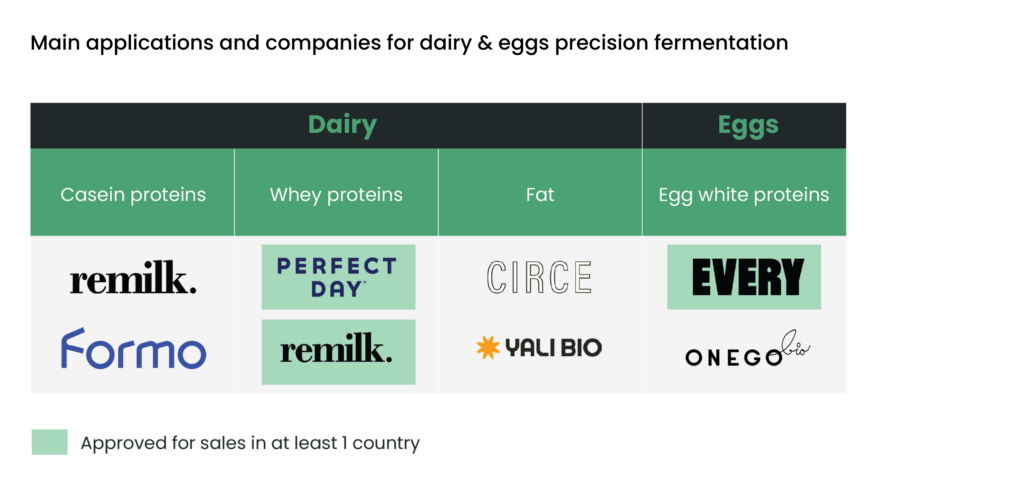
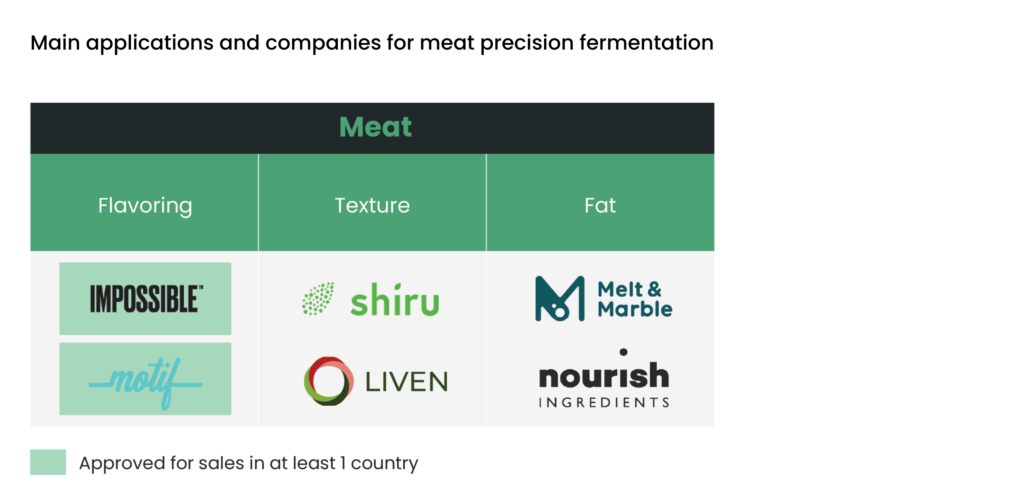
In-depth profiles of the most noteworthy ingredient developers, their products, and approval status.
A map of companies along the precision fermentation process, from ingredient producers to end brands.
Where the biggest business opportunities lie, and why partnerships are key to capturing them.
Real examples of successful collaborations already underway in the precision fermentation space.
A few of the numbers behind the precision fermentation opportunity:
2024
the year precision-fermented milk proteins are expected to reach price parity, according to New Culture
$1B+
funding raised by dairy precision fermentation startups to date
10 mo.
time it took Perfect Day to earn US regulatory approval for whey protein
“In 2022, we’ve seen the majority of large ingredient providers grow their interest in precision fermented ingredients.”

Floor Buitelaar
Founder, Bright Green Partners
No – it’s not aiming to replace traditional protein sources. Instead, it’s expected to significantly improve existing alternatives already on the market, including plant-based and mycoprotein-based products.
For most consumers, barely at all – the ingredients are virtually identical to their animal counterparts in taste, texture, and function. For vegan and vegetarian consumers, it opens a much broader range of products and flavors.
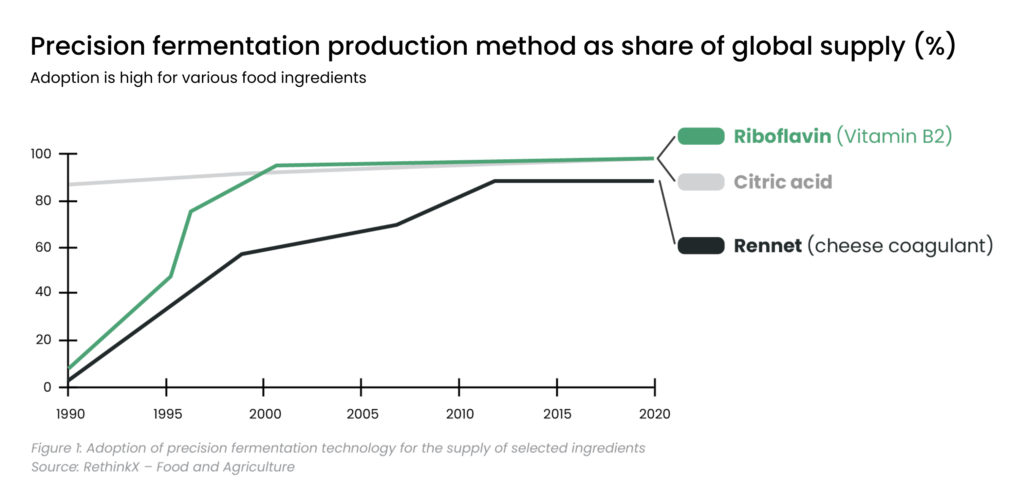
Newer ingredients target lower-value molecules that are complex to produce but essential to many products, enabled by advances in genetic engineering and computational biology. Established products tend to be either high-value complex molecules (like insulin or rennet) or simpler, easy-to-produce ingredients (like citric acid or lysine).
BGP offers business strategy, strategic product innovation, and technical and commercial due diligence to support companies navigating and capitalizing on precision fermentation.
Bright Green Partners is the global strategy consultancy in AgriFood Tech. We envision a food system where profit, planet and people thrive in a sustainable balance, and we help the largest corporates and investors make that transition. We combine top-tier consulting with the deep expertise of our exclusive 2500+ global expert network – across strategy, M&A advisory, and due diligence – for clients like Ajinomoto and Kraft Heinz throughout the agrifood value chain.
This 18-page study summarizes the latest developments and opportunities in alternative protein precision fermentation for corporates.
"*" indicates required fields