
The challenge
Our client, a major philanthropic organization, wanted to identify which novel post-harvest technologies to invest in to reduce food loss of nutrient-dense foods in selected low- and middle-income countries (LMICs). The key question was which novel, not-yet-widely-tested technologies could realistically work under LMIC constraints such as weak cold chain, fragmented aggregation, infrastructure limitations, and varying regulatory environments. The objective was to move from a broad landscape of possible interventions to a prioritized portfolio of technologies and actionable pathways for deployment.
approach
Delivered in four phases, over 17 weeks:
Built a long list of nutrient-dense foods across priority countries based on nutritional relevance, production scale, and post-harvest loss levels.
Screened over 50 post-harvest and processing technologies, assessing relevance to the priority foods and LMIC deployment conditions, and narrowed the long list to roughly 20 high-potential technologies for deeper assessment.
Combined desk research with provider interviews, expert input, and validation to identify the top six technologies with the strongest feasibility-adjusted impact on food loss reduction, quantifying impact on food loss reduction, shelf-life extension, relevance to priority foods, and technical, economic, and social/regulatory feasibility across the target countries.
Assessed where and how the priority technologies could be deployed across the four target countries and value chains, defined key barriers, enabling conditions, and catalytic actions needed for piloting, de-risking, and scale-up, and quantified business cases to show where deployment can be commercially viable.
Results
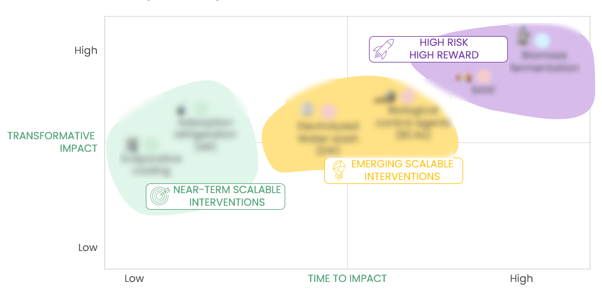
Figure 1: Technology assessment results – 6 technologies best positioned to reduce FLW and thus increase food availability at scale – anonymized BGP assessment
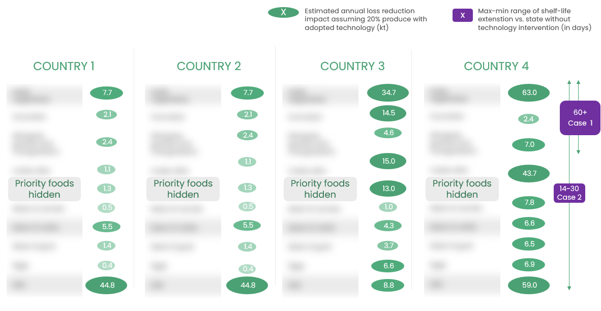
Figure 2: Country-level impact for one of the priority technologies showing annual loss reduction in kilotons of food per country – anonymized BGP assessment
Client impact
The final deliverables equipped the client with a clear, evidence-based view of which post-harvest technologies offer the strongest pathway to reducing food loss and improving the availability of nutrient-dense foods in LMICs.
Key deliverables included:
As a result, the client gained a roadmap for where to focus investment, which technologies to validate first, and how to play an impactful role in de-risking deployment and enabling long-term scale. The findings also identified the most viable business models for the prioritized technologies, clarifying how they can operate and create value.
Talk through your investment or deployment strategy with our team.
Explore our case studies